
 English
 Español
 Portugues
 Pусский
 Français
 Deutsch
 日本語
日本語 한국어
한국어 العربية
 Italiano
 Nederlands
 Svenska
 Polski
 ไทย
ไทย Indonesia
 Tiếng Việt
 čeština
 Română
 Suomalainen

When a machine needs a shaft that does more than simply rotate, an eccentric shaft can make a big difference. At Dongguan Jifan Precision Machinery Co., Ltd., we manufacture High-Precision Custom Eccentric Shaft Components for customers who need specific dimensions, offset positions, materials, and operating performance. Instead of asking customers to change their equipment around a standard shaft, we make the shaft to match the machine.
We work with customer drawings, samples, technical specifications, and actual equipment requirements. Based on these details, we handle eccentric shaft machining, dimensional control, inspection, and final verification. Our work also covers other precision components such as custom Cams, Cam Mechanisms, plate cams, conjugate cams, crankshafts, and irregular cam components.
Over the years, we have supplied precision components to more than 1,000 customers. Our experience covers daily chemical production, biopharmaceutical equipment, food processing, electronics, plastics and hardware, printing, beverage machinery, and other automated production systems. Every project is a little different, so we pay close attention to the application before deciding how a component should be made.
This page explains how we approach custom eccentric shaft manufacturing, what an eccentric shaft does, how we control machining quality, and what customers should consider before placing an order.
1. What Is a Custom Eccentric Shaft?
An eccentric shaft is a rotating mechanical part in which one or more working sections are positioned away from the main centerline of rotation. This offset creates a controlled movement when the shaft turns. In simple terms, instead of everything rotating around exactly the same center, part of the shaft moves around an offset center.
That small difference in position can create useful mechanical motion. Depending on the design, an eccentric shaft can help convert rotary motion into reciprocating movement, control the position of a connected component, drive a mechanism, or create a specific movement pattern inside an automated machine.
We often receive requests for shafts that are not available as standard catalog components. A customer may already have a machine design and need an eccentric section at a particular distance from the shaft center. Another customer may need several eccentric sections with different positions. In these cases, Custom Eccentric Shaft Components are usually more practical than trying to adapt a standard shaft.
The key dimensions can include overall length, shaft diameter, eccentric offset, journal diameter, shoulder position, keyway dimensions, thread details, surface requirements, and the relationship between multiple working sections. Material and heat treatment may also be selected according to the actual load and working environment.
Because an eccentric shaft rotates with an intentional offset, balance and dimensional accuracy matter. A shaft can look correct when measured at one point but still cause problems if the eccentric section is not positioned correctly in relation to the main shaft centerline. This is why we treat the drawing and application requirements as a complete system rather than checking only individual dimensions.
| Typical Requirement | What We Check | Why It Matters |
|---|---|---|
| Overall shaft dimensions | Length, diameter, shoulders and end features | Ensures the component fits the machine assembly |
| Eccentric offset | Position of the eccentric working section | Controls the movement produced by rotation |
| Connection features | Keyways, threads, grooves and mounting areas | Allows reliable connection with other components |
| Surface condition | Machined surfaces and specified finish requirements | Helps reduce friction and support stable operation |
Source: Dongguan Jifan Precision Machinery Co., Ltd. production and inspection workflow. Actual requirements depend on customer drawings and project specifications.
2. How Does an Eccentric Shaft Work?
The working principle is easier to understand than it may first appear. Imagine a round shaft rotating around its main center. If a section of that shaft is placed slightly away from the centerline, that section follows an offset circular path as the shaft rotates.
When a connecting part is placed on the eccentric section, the offset movement can be used to produce another type of motion. For example, the mechanism may push and pull a connected part, change its position, or provide a repeated movement required by an automated production process.
The amount of offset is important. A small eccentricity creates a smaller movement, while a larger offset can create a larger movement. The actual result also depends on the connecting mechanism and the geometry of the complete machine.
For this reason, we do not look at an eccentric shaft as an isolated metal part. We consider how the shaft works together with bearings, cams, followers, connecting rods, gears, rollers, or other moving components. A good shaft should fit the entire mechanism, not just pass a basic dimensional inspection.
Rotary Motion and Offset Motion
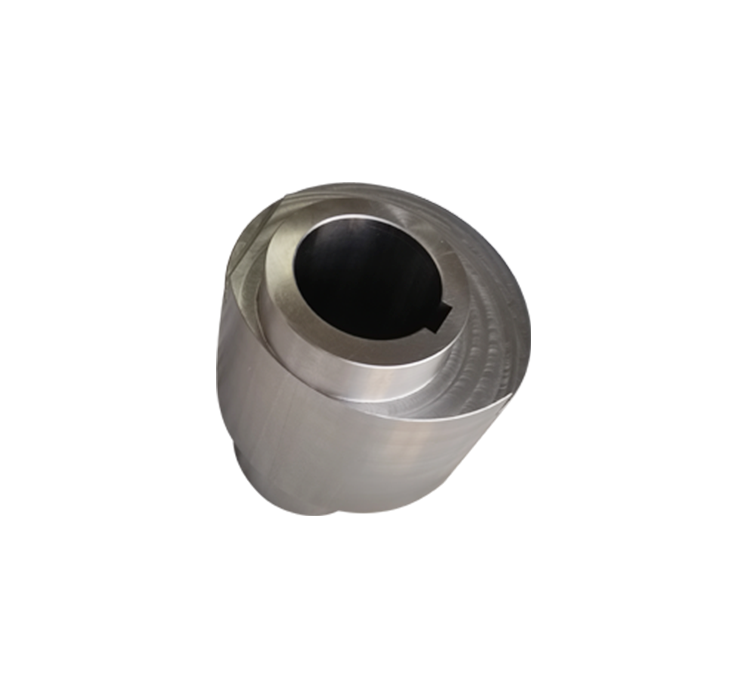
In a simple eccentric mechanism, the shaft rotates continuously while the eccentric section moves around the main axis. The connected component follows this movement. This is one reason eccentric shafts are useful in automated machinery where repeated and controlled mechanical movement is required.
For a custom project, we normally need to understand the required movement before finalizing the machining method. Important information may include rotation speed, working load, connection method, bearing arrangement, required eccentricity, operating environment, and expected production quantity.
When these details are available early, we can make better decisions about material, machining sequence, inspection points, and production method.
| Design Factor | Low-Demand Example | Higher-Demand Example |
|---|---|---|
| Production quantity | Prototype or small batch | Repeated production orders |
| Geometry | Single eccentric section | Multiple eccentric or stepped sections |
| Machining needs | Basic turning and milling | Multi-step precision machining and grinding |
| Inspection focus | Basic dimensional verification | Detailed dimensional and positional inspection |
Source: Dongguan Jifan Precision Machinery Co., Ltd. manufacturing practice. The actual machining and inspection plan is determined by component geometry, material, quantity, tolerance requirements, and customer specifications.
3. Main Features of Our High-Precision Custom Eccentric Shaft Components
Our approach is based on customization rather than a one-size-fits-all product. We understand that a shaft used in a food packaging machine may have very different requirements from one used in an electronics assembly machine. Even two shafts that look similar may require different materials, tolerances, surface conditions, or inspection methods.
Made to Customer Drawings
We can manufacture eccentric shafts according to customer drawings, technical specifications, samples, and equipment requirements. A drawing gives us the basic geometry, but we also pay attention to notes about materials, tolerance, surface treatment, heat treatment, and assembly requirements.
Flexible Eccentric Geometry
We support different shaft shapes and eccentric arrangements. Depending on the project, a component may contain one eccentric section, several stepped sections, different shaft diameters, grooves, keyways, threaded ends, or other machined features.
Precision Machining
We use precision machining methods suited to the component design. CNC turning, milling, grinding, Profile Grinding, and other processes may be combined when required. The exact process is selected after reviewing the part drawing and technical requirements.
Stable Mechanical Performance
A properly machined eccentric shaft should work smoothly with the rest of the mechanism. Dimensional consistency, correct eccentric position, suitable surface condition, and appropriate material selection all contribute to reliable operation.
Support for Different Production Volumes
We work with prototype development, small batches, and repeat production. The production cycle is not a fixed number because it depends on the part complexity, material, order quantity, machining requirements, and customization level. We normally confirm the production schedule after reviewing the actual project.
| Product Aspect | Our Approach | Customer Benefit |
|---|---|---|
| Design | Based on drawings, samples and machine requirements | Better fit with existing equipment |
| Machining | Process selected according to geometry and specifications | Suitable balance between precision and production efficiency |
| Inspection | Dimensional inspection and final verification | Greater confidence before assembly |
| Packaging | Protective standard packaging with customized options | Reduced risk of damage during handling and transportation |
Source: Dongguan Jifan Precision Machinery Co., Ltd. product and order-processing information supplied for this product page.
4. How We Manufacture Custom Eccentric Shafts
Precision shaft manufacturing starts long before the machine begins cutting metal. For us, the first step is understanding what the component actually needs to do.
Step 1: Review the Drawing or Sample
We first review the drawing, sample, or technical information provided by the customer. We look at shaft dimensions, eccentric offset, machining features, material, tolerances, surface requirements, and connection details.
If the part is being used in an existing machine, information about the equipment can also be useful. For example, the rotation speed and bearing arrangement can help us understand which dimensions deserve particular attention.
Step 2: Confirm Material and Machining Requirements
Material selection depends on the customer's design and working conditions. Different applications may require different mechanical properties, wear resistance, corrosion resistance, or heat-treatment conditions. We do not use one material for every eccentric shaft.
At this stage, we also determine the machining route. A relatively simple shaft may require turning and milling, while a more complex component may need additional grinding or other precision operations.
Step 3: Rough Machining
The initial machining stage establishes the basic shape of the component. We remove excess material while keeping suitable machining allowance for later operations. Correct setup is important because eccentric features need to be positioned in relation to the main shaft centerline.
Step 4: Precision Machining
After the basic geometry is established, we perform the precision operations required by the drawing. These may include CNC turning, milling, drilling, slotting, grinding, and other machining processes.
For eccentric features, setup accuracy is especially important. If the offset is incorrect, the final movement of the machine can also be incorrect. We therefore pay attention to both individual dimensions and the relationship between different features.
Step 5: Grinding When Required
Grinding can be used when a project requires tighter dimensional control or a specific surface condition. We also provide profile grinding and irregular cam grinding for other precision mechanical components, which gives us useful experience with complex profiles and controlled geometry.
Step 6: Dimensional Inspection
After machining, we inspect the finished component according to the agreed specifications. Depending on the drawing, this can include checking shaft diameter, length, eccentric position, grooves, keyways, threads, and other critical features.
Step 7: Final Verification and Packaging
Before delivery, we complete final quality checking and verification. Once the component meets the agreed requirements, we use protective packaging to help prevent scratches, impact, and other damage during transportation.
| Manufacturing Stage | Main Purpose | Typical Output |
|---|---|---|
| Drawing review | Understand geometry and technical requirements | Confirmed machining plan |
| Rough machining | Create the basic shaft geometry | Machined blank |
| Precision machining | Achieve specified dimensions and features | Finished shaft geometry |
| Grinding | Improve dimensional or surface requirements when specified | Precision-finished surface |
| Inspection | Verify agreed specifications | Inspected finished component |
Source: Dongguan Jifan Precision Machinery Co., Ltd. manufacturing workflow. Individual processes vary according to drawing requirements, material, geometry, quantity and application.
5. Applications and Industries We Serve
Eccentric shafts are useful wherever controlled mechanical movement is required. Our custom precision components are used in a wide range of automated machinery and production equipment.
Daily Chemical Equipment
Production equipment in the daily chemical sector often contains repeated mechanical actions. Custom shafts can be designed to fit the specific movement and space limitations of filling, packaging, conveying, or processing equipment.
Biopharmaceutical Equipment
Biopharmaceutical machinery may require careful mechanical control and stable operation. Shaft dimensions and surface requirements can be specified according to the equipment design and operating conditions.
Food Processing Machinery
Food processing and packaging systems often depend on repeated and synchronized movement. Custom eccentric shafts can be integrated into mechanical transmission and motion-control assemblies where the design calls for offset movement.
Electronics Manufacturing Equipment
Electronics production lines frequently use automated machinery with compact mechanical assemblies. In these systems, shaft size, positioning, and dimensional consistency can be important because several components must work together within a limited space.
Plastics and Hardware Equipment
Plastic and hardware production equipment can involve continuous operation and repeated mechanical motion. We manufacture custom shafts based on the actual machine design rather than relying only on standard dimensions.
Printing Machinery
Printing equipment uses coordinated mechanical movements, rollers, shafts, and transmission parts. Depending on the machine design, eccentric components can help adjust or control mechanical movement.
Beverage Equipment
Automated beverage production and packaging systems also use precision mechanical components. Custom shafts can be manufactured according to the required equipment configuration, connection method, and operating conditions.
| Industry | Possible Equipment Use | Key Consideration |
|---|---|---|
| Daily chemical | Processing and packaging machinery | Stable repeated movement |
| Biopharmaceutical | Automated production equipment | Dimensional consistency and equipment compatibility |
| Food processing | Processing and packaging systems | Reliable mechanical operation |
| Electronics | Assembly and automated production equipment | Compact precision components |
| Plastics and hardware | Production and forming machinery | Durability and repeat operation |
| Printing | Printing and transmission mechanisms | Correct shaft positioning |
| Beverage | Filling and packaging equipment | Reliable synchronized movement |
Source: Dongguan Jifan Precision Machinery Co., Ltd. application information. Actual application suitability should be confirmed according to the machine design and operating conditions.
6. Custom Eccentric Shaft Machining vs. Standard Shaft Solutions
One question we hear quite often is whether a standard shaft can be modified instead of ordering a custom eccentric shaft. Sometimes it can. But when the machine has a specific eccentric position, unusual geometry, special mounting features, or tight dimensional requirements, a custom component is usually the cleaner solution.
A standard shaft is designed around common dimensions and common applications. That can be useful when the machine accepts those dimensions directly. The problem starts when the shaft needs to fit a particular mechanism that was not designed around standard sizes.
With custom eccentric shaft machining, the component can be developed around the actual equipment. The eccentric distance, shaft length, working diameter, connection features, and other dimensions can be defined according to the drawing.
| Comparison Item | Standard Shaft | Custom Eccentric Shaft |
|---|---|---|
| Dimensions | Fixed catalog dimensions | Based on customer specifications |
| Eccentric geometry | Limited to available designs | Can be designed for the required mechanism |
| Machine compatibility | Depends on existing equipment | Designed around equipment requirements |
| Material selection | Depends on standard product | Can be discussed according to application |
| Production quantity | Usually linked to standard availability | Suitable for customized production orders |
Source: Dongguan Jifan Precision Machinery Co., Ltd. product-development and manufacturing practice. This comparison is a general engineering guide rather than a statement that custom components are always technically or economically preferable.
In practice, we recommend comparing the cost of the shaft itself with the cost of modifying the surrounding mechanism. A cheaper standard shaft is not necessarily the cheaper solution if it requires extra brackets, adapters, machining, or changes to the machine design.
7. Why Choose Jifan for High-Precision Custom Eccentric Shaft Components?
We are not simply interested in making a metal shaft and sending it out. Our goal is to make a component that works properly when it reaches the customer's machine.
Dongguan Jifan Precision Machinery Co., Ltd. is based in Dongguan, Guangdong, a major manufacturing area in China. Our main business covers cam mechanisms, Custom Cam Machining, cam design, profile grinding, eccentric shafts, crankshafts, plate cams, conjugate cams, and other precision mechanical components.
We Understand Precision Motion Components
Eccentric shafts are closely related to cams, crankshafts, and other motion components. Our experience with these parts helps us understand how individual dimensions affect the movement of a mechanical system.
We Work from Actual Requirements
We do not expect every customer to use the same shaft design. We work from drawings, specifications, samples, and equipment requirements. If the customer has a special configuration, we review the details before confirming the production route.
We Support Customized Manufacturing
Our production service covers customized shaft machining as well as other precision components. This is useful for automation equipment manufacturers and machine builders who need several related mechanical parts from one manufacturing partner.
We Focus on Inspection Before Delivery
Before delivery, products go through machining, dimensional inspection, quality checking, and final verification according to the agreed specifications. We believe this step should be part of the manufacturing process, not something added only when a customer asks about quality.
We Have Experience with More Than 1,000 Customers
Our products have been trusted by more than 1,000 customers. This experience gives us exposure to different machine designs, industries, component geometries, and customization requirements. It also reminds us that a small dimensional detail can sometimes have a big effect on the final assembly.
We Offer Flexible Logistics and Packaging
After production and final inspection, products can be shipped by express, air freight, sea freight, or another suitable method according to the destination and order size. Standard protective packaging is used to reduce the risk of damage during handling and transportation. Customized packaging can also be arranged when required.
| Service Stage | What We Provide | Typical Customer Information Needed |
|---|---|---|
| Initial review | Drawing and requirement review | Drawing, sample, specifications or machine details |
| Production planning | Machining and inspection arrangement | Material, quantity and tolerance requirements |
| Manufacturing | Custom machining and finishing | Confirmed technical specifications |
| Quality control | Dimensional and final verification | Agreed inspection requirements |
| Delivery | Protective packaging and suitable transportation | Destination and shipping requirements |
Source: Dongguan Jifan Precision Machinery Co., Ltd. company and product information provided for this page.
8. Frequently Asked Questions About Custom Eccentric Shafts
1. Can you manufacture an eccentric shaft according to our drawing?
Yes. We manufacture custom eccentric shaft components based on customer drawings, specifications, samples, and equipment requirements. The drawing should ideally include important dimensions, tolerances, material information, eccentric offset, surface requirements, and connection details.
2. What information should I provide for a custom eccentric shaft?
We recommend providing the shaft drawing first. If available, also provide the material, quantity, eccentric offset, critical tolerances, surface requirements, heat-treatment requirements, operating speed, working load, bearing information, and application. More complete information allows us to evaluate the machining requirements more accurately.
3. Do you manufacture small-batch custom eccentric shafts?
Yes. We support customized production, including prototype and small-batch requirements. The production cycle depends on the component's complexity, material, quantity, machining process, and customization requirements. We confirm the schedule after reviewing the actual order.
4. Can you manufacture multiple eccentric sections on one shaft?
Yes, depending on the drawing and manufacturing requirements. A shaft can be designed with multiple eccentric, stepped, or working sections. The important point is to clearly define the position and relationship of each section on the technical drawing.
5. Do you provide other precision shaft components?
Yes. In addition to eccentric shafts, our main products include crankshafts and other custom precision mechanical parts. We also specialize in custom cams, cam mechanisms, plate cams, conjugate cams, cam design, irregular cam grinding, and profile grinding.
6. Can you help if we only have a sample instead of a complete drawing?
A sample can provide useful information for a customized manufacturing project. We can review the available sample information and discuss the required dimensions, material, quantity, and application. For accurate production, technical details normally need to be confirmed before manufacturing begins.
7. How do you inspect the finished eccentric shaft?
Finished products undergo dimensional inspection, quality checking, and final verification according to the agreed specifications. The exact inspection items depend on the drawing and the critical features of the component.
8. How long does custom eccentric shaft manufacturing take?
There is no single production time that applies to every project. The manufacturing cycle depends on complexity, material, order quantity, machining requirements, inspection requirements, and customization level. We confirm the estimated schedule after reviewing the specific project.
9. What payment terms do you accept?
Payment terms are arranged according to the contract. They can depend on order quantity, production requirements, and project conditions. The exact terms are confirmed before the order is placed.
10. How will the eccentric shafts be shipped?
We can arrange express, air freight, sea freight, or other suitable transportation methods according to the destination and order size. Standard protective packaging is used to help protect the components during handling and transportation. Customized packaging can be discussed for special requirements.
11. Can you produce other custom mechanical components together with the shaft?
Yes. Our product range includes custom cams, cam mechanisms, plate cams, conjugate cams, crankshafts, eccentric shafts, and other precision mechanical components. For automation projects that require several related components, discussing the complete component set with us can help keep the manufacturing requirements consistent.
12. What makes a good eccentric shaft design?
A good design starts with the actual working conditions. The shaft should have suitable dimensions, material, eccentric offset, connection features, and surface requirements for the machine. The relationship between the eccentric section and the main shaft centerline is particularly important because it directly affects the movement of the connected mechanism.
Get a Quote for High-Precision Custom Eccentric Shaft Components
If you are looking for High-Precision Custom Eccentric Shaft Components, we recommend sending us the drawing or sample information first. We can then review the shaft geometry, eccentric position, material, quantity, tolerance requirements, and application.
For automation machinery and production equipment, a small component can have a surprisingly large effect on the whole machine. That is why we take the time to understand how the eccentric shaft will actually be used instead of looking only at the part dimensions.
We provide custom eccentric shaft machining, precision shaft manufacturing, cam machining, profile grinding, and other customized mechanical component services from Dongguan, China. Our production and inspection process is arranged according to the customer's agreed technical requirements, with protective packaging and flexible shipping options available for different order conditions.
Send us your drawing, sample details, required quantity, and application information to discuss your custom eccentric shaft project.
Related Precision Machining Services
Custom Eccentric Shaft Machining
Precision Shaft Manufacturing
Custom Cam Machining
Cam Mechanism Manufacturing
Plate Cam Manufacturing
Conjugate Cam Manufacturing
Custom Crankshaft Machining
Profile Grinding Services
Irregular Cam Grinding
Custom Precision Mechanical Components
